
Barry Briggs
Every educated American should visit China.
Why?
Because much of you’ve heard on the news is wrong. It’s fragmentary, sensationalized, often biased, and doesn’t paint the full picture.
Not that I can based on just my first trip to mainland China, lasting just less than a month, but here are a few (warning: opinionated) perspectives.
Our Trip and a Few Caveats
We visited the Middle Kingdom in April and May of 2026, touring many of the major tourist attractions and sites: the Great Wall, Forbidden City, the terra-cotta warriors in Xi’an, the extraordinary Avatar Mountains in Zhangjiajie, the marvelous Bund in Shanghai, and, of course, the pandas – among others.
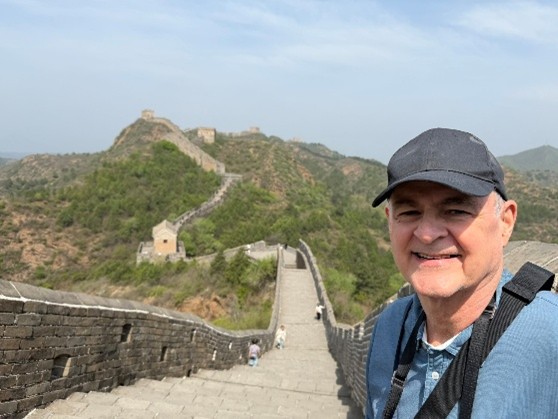
To be clear, ours was a carefully curated itinerary. We stayed at the best hotels, enjoyed private guides and drivers, and in general traveled in comfort. (We very highly recommend WildChina as a tour operator, if you’re interested.)
What We Loved in China
There’s lots to like about China. Despite all the negative reporting we see here in the US, we found it modern, cosmopolitan, and the people unflaggingly friendly. Here are a few things that surprised us:
Infrastructure is Amazing
We were all over the country. Everywhere the highways and main roads were smooth, well-paved and up to date – not a pothole to be found anywhere. Many were lined with mile after mile of flowers: one guide told us that they close the highways in the middle of the night to water and fertilize them! In the countryside highways were usually bordered with trees and shrubs; and very few (there were some, to be clear) billboards littered them. None for personal-injury attorneys.
5G connectivity was available literally everywhere with excellent response times. Even on the tops of the mountains we climbed (or ascended in comfortable cable cars) I had no trouble. (I was testing a web application I wrote which runs on Microsoft’s Azure cloud back in the US – and got as good if not better response time up on the peaks than at home.)
I’ll talk about the Great Firewall in a moment, however.
China is Very Safe
Yes, China is a surveillance society. There are cameras everywhere.
But as a result street crimes are virtually nonexistent. No pickpockets (as in Europe, or for that matter, New York). None. With all the cameras they wouldn’t dare. You can hold your wallet up and no one will take it.
In Xi’an we visited the crowded terra-cotta warrior museum (amazing). We were jostled everywhere. I never feared for my expensive camera or phone.
I have to admit, I liked it.
Bullet Trains: Wow
China is in the midst of a building spree for high-speed trains; we here in the US are at least a decade behind. From Beijing to Xi’an, from Xi’an to Chengdu, and other routes, we thoroughly enjoyed the trains, travelling upwards of 340km/hour (over 200mph).
WildChina reserved “Business Class” seats for us, which on the trains is more luxurious than first class. The seats are larger and more comfortable than first-class on airlines; well-dressed attendants serve snacks and drinks; you can get up and walk around anytime (no seat belts! – hey, it’s the little things); you don’t have to go through invasive security as at airports; and, above all, they are consistently on time to the minute. The train stations – which are huge – sport pleasant lounges for business-class travelers.
We loved the trains and will miss them.
Why can’t we have them here? I have some thoughts at the end of this essay.
The Quiet City Streets
In 2025, over half the cars sold in China were EVs. Let that sink in for a moment.
You can tell an EV in China as they possess green license plates where gas-powered cars have blue ones. From what I could tell, overall the number of EVs on the road easily matched the gas-powered ones (there are tax incentives as there used to be here).
Why are there so many EVs? One reason is that, unlike the US, in China there is a nationwide network of charging stations. And charging is much cheaper than filling up with gas. We were supposed to be building such a network after the Infrastructure Act — but it didn’t happen. Why?
Now, there are traffic jams in the Chinese cities just as there are here. And some bad ones: we were there during the 5-day May Day (they call it Labor Day) holidays: whew! But many Chinese get around the cities on scooters (think Vespas) except nearly all are electric, which means they’re dead silent – and clean.
They do, however, tend to sneak up on you when you’re walking.
Speaking of Cars…
Nearly all the cars we saw on the crowded streets were relatively new; not a clunker to be found anywhere! (I suspect the reason has to do with the sudden inflow of money from the West within the last decade or so — all that cheap stuff from Amazon and Wal-Mart!).
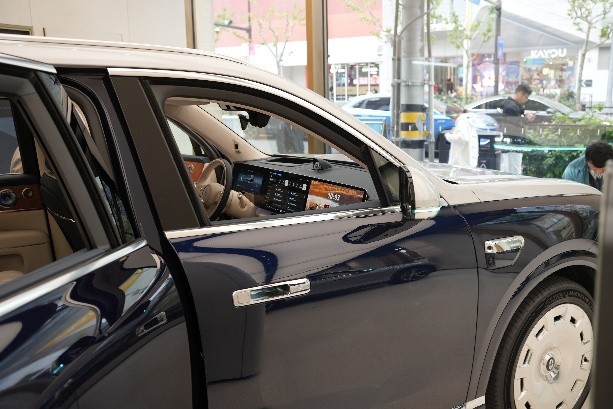
I like cars. And I lusted after several. Xiaomi makes a lovely little sports car somewhat reminiscent (but way cheaper) of a Porsche, for example.
We visited the Huawei (yes, that Huawei) flagship store in Shanghai and there was a full-size SUV there I’d give my eye teeth for. Wraparound video on the dash, electronic seats, gorgeous interior, fully electric of course – all for around $60K US.
Of course you can’t get them here and I have some thoughts on that at the end.
Electrification
Much has been made in the West about the human cost of the massive investments China has made in hydroelectric power, that is, dams: in particular, the Three Gorges Dam, the largest in the world, which displaced over million people during construction. And to their credit, China makes no secret of the fact.
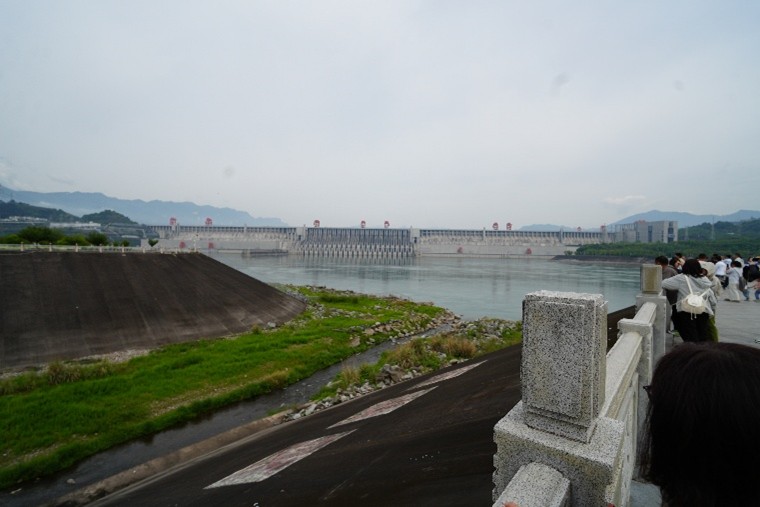
That said, however, the enormous amount of renewable energy the dams create powers the vast network of trains mentioned above, as well as the explosive expansion of the southeastern cities of Chongqing (population almost 4x that of NYC), Chengdu (2.5x), and of course the bright lights of Shanghai (3x).
Electricity is the great enabler.
Alipay
The internet giant Alibaba owns a payment service called Alipay. It’s like Apple Pay or Google Pay but more convenient and far more ubiquitous. To pay for anything – and I mean anything, from high-end meals to souvenirs on the street to (we did this) a drone video on the top of a mountain to street beggars – you whip out your phone, load up your personal Alipay barcode, the vendor scans, and boom. You’re done. I loved the convenience and simplicity.
Communist, Shmommunist
Yes, China is a Communist country with an authoritarian government and central economic planning.
But private enterprise thrives, from small shops to giant companies like Huawei, Alibaba, and DeepSeek (the AI company challenging US firms). And walking along South Nanjing Street in Shanghai, you’d could swear you were strolling a modern version of Fifth Avenue in New York – if not for all the Chinese characters. (At the three-story Nike flagship store I had my feet electronically measured and purchased customized sneakers: most comfortable footwear I’ve ever owned.) All the major Western luxury brands – Louis Vuitton (who built a Titanic-themed store with a museum), Rolex, and so on, are well represented, as are a number of Chinese luxury stores.
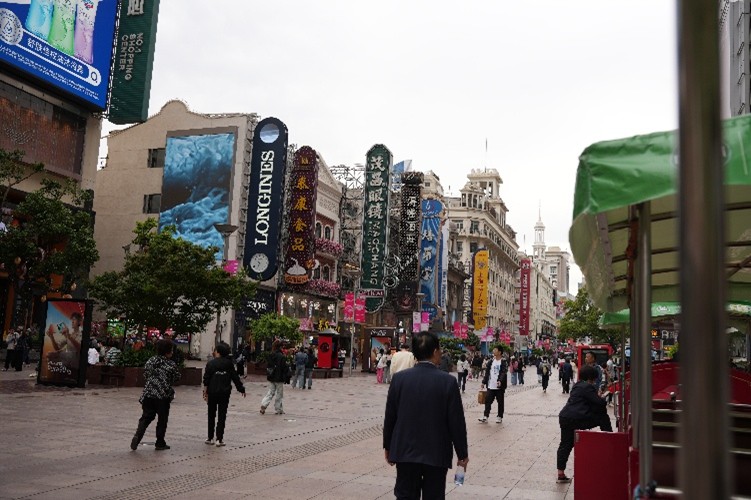
Now it’s true: the central government helps, cooperates with, partners with, and in many cases outright owns large Chinese firms: major banks, airlines, construction firms, telecoms.
Then again, the US government recently took a 10% stake in Intel, numerous investments in lithium and rare earth firms, steel, and semiconductors (e.g., Nvidia and AMD). These aren’t ownership like the Chinese SOEs (state-owned enterprises), to be clear; but to some it might all just be a matter of degree.
You be the judge.
Things in China We Weren’t Crazy About
China isn’t perfect: far from it.
The Great Firewall
China blocks many Western websites, especially news and social media sites including the Washington Post, New York Times, and Facebook – all of which I use. It is beyond annoying.
You can usually get around it. If you’re a Westerner with a Western cell service like Verizon and international roaming, you can (usually) get to any site. I also had an eSim which also bypassed the firewall and the combination (I was never exactly sure which route the phone took, but it didn’t matter). I emphasize “usually.”
My laptop was a different story. On it I’d loaded a VPN: results varied. Sometimes it worked great on the hotel wi-fi. In other hotels it didn’t work at all or was sporadic. Sometimes it would work for a few minutes and then something would kick in – perhaps somewhere the VPN was detected – and it would stop working.
I don’t understand what China is afraid of.
Free Speech
While the Chinese I met were, on the whole, voluble, politics was an area that drew reticence or even silence. One person mentioned a friend who had posted something critical about the government recently only to have the police show up as a warning.
But all were cautiously curious about how we felt about the state of the United States. Only one Chinese we met explicitly asked how we felt about Trump; and he opened up when we said, well, in a nutshell, we don’t like him.
“I approve of my government,” he said. Another mentioned her ninety-odd-year-old grandmother, who enjoyed a great government pension, ample food, excellent healthcare: “she loves her government,” she said. I’m certain she meant it.
I countered with “I don’t care for the people running our government now. But I have confidence in our system of government.”
However, they’re not entirely without snark. There’s a joke that CCTV (China Central Television) news is “10 minutes of busy Chinese leaders, 10 minutes of happy Chinese people, and 10 minutes of crime and chaos in the US.”
Cookie-Cutter Apartment Buildings
The “Chinese dream,” if there is one, does not include a house. Instead, city-dwellers live in row after row of high-rise apartment buildings, huge groves of them, all roughly twenty stories high and thin, so that all occupants have a window on one side or the other. These massive forests of apartments go on and on, sometimes from the train window reaching the horizon.
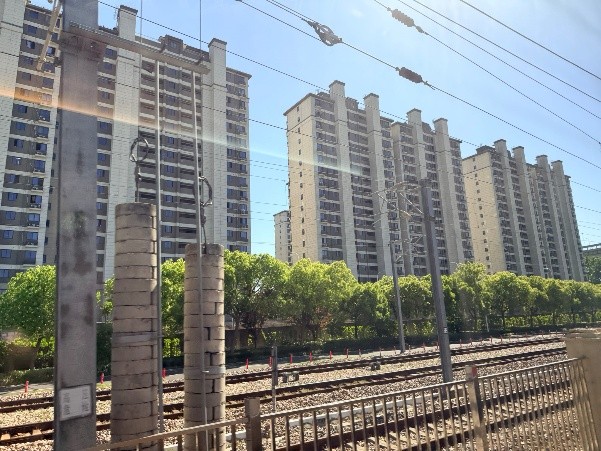
I jokingly asked a guide “how does anyone find their home?” in row after row of identically constructed buildings? He didn’t find it funny.
There’s plenty of evidence that these were overbuilt; we saw several “ghost towns” of unoccupied buildings. Although one guide did try to downplay the effects, many prominent real estate developers have gone bust in recent years and the crisis continues.
The Food
Wasn’t crazy about it. Bland for the most part: if you like spicy, you have to ask for hot sauce (they call it chili sauce). The exception was in Chengdu (in Szechuan province) where they serve “hot pots” which are, well, beyond spicy: the Szechuan peppercorn actually numbs your tongue (we thought it was an allergic reaction at first).
And if you’re vegetarian like my wife you’re kind of out of luck: everything is pork, pork, pork, with some chicken and some beef.
Closing Thoughts
We learned a lot on this trip: as they say, travel provides you with perspective.
China is a Fearsome Competitor
For the first time in America’s history, we face a nation that truly presents long-term, existential competition. They have made the core investments (with lots of our money, as mentioned above, that Amazon and Wal-Mart send for cheap goods) that set them up for success over decades if not centuries.
We in the US made such investments in the 1950s and 1960s – think for example the interstate highway system – but China has equaled or surpassed us.
And they continue to build: we witnessed many high-speed train tracks and bridges under construction. By contrast we are hobbled by litigation, by short-sighted regulation, and by billionaires’ self-interest. Above all, the trillions we could have invested on infrastructure we have chosen instead to use on useless, valueless military adventures.
We must learn to build again.
Protectionism Hurts Consumers
I really want one of those inexpensive electric Huawei SUVs. But I can’t buy one here.
This is partly because of the “Connected Vehicles Final Rule,” released by the US Department of Commerce, which explicitly prohibits the import or sale of connected vehicle systems designed, developed, manufactured, or supplied by Chinese or Russian-related – the key word being “connected.” Since every modern car is somehow connected to the internet, that means essentially every car from China (or Russia, but who cares).
The law is, in theory, aimed at protecting US industry and workers: a laudable goal. But it fails in the far more important aim of protecting the US consumer, who is forced to pay artificially inflated, anticompetitive prices. Let’s also remember that the history of protectionism – the infamous Smoot-Hawley Act of 1930, which raised tariffs, catastrophically backfired, worsening the Great Depression, comes to mind – is not a good one. (Read Andrew Ross Sorkin’s terrific history 1929 for more detail.)
Now, the US government has demonized companies like Huawei for their alleged connections to the Chinese intelligence community and military. This is an important concern – but it could be addressed. Just as Microsoft provides the source code to Windows to China (as it does to every government), so too could Huawei provide its code to the US for auditing.
But I don’t think the US government wants to address it. I suspect that the car companies – and Elon Musk in particular – heavily lobby against the import of inexpensive Chinese cars (in fact, Ford CEO Jim Farley recently said that Chinese car brands like BYD are the “best in the business”). It’s no wonder they’re afraid.
The Chinese, on the other hand, have allowed Tesla to build a large factory south of Shanghai; Model 3s and Model Ys are popular – as is, inexplicably to me, Buick.
I think we should let the Chinese cars in just as they have let American cars into China. Let the buyers decide. That’s what free-market capitalism is…isn’t it?
Bullet Trains
It’s ridiculous. The high-speed rail project in California, connecting San Francisco and Los Angeles, has been underway since 2015 and has no confirmed completion date.
Are the airlines quietly lobbying against bullet trains? Maybe, but I doubt it. More likely it’s just bureaucratic bullshit.
As we’ve seen with our own eyes, the benefits of high-speed rail are obvious and amazing.
We should be ashamed. There’s no excuse for this.
And Finally
Before our trip I read Dan Wang’s excellent Breakneck: China’s Quest to Engineer the Future, in which he argues that the key difference between the US and China is this: China’s leaders (the Central Committee) are largely engineers by trade; ours (the Congress) are nearly all lawyers.
Which means China knows how to build stuff, perhaps trampling civil liberties in the process. When it comes to infrastructure and construction, they are unequaled, perhaps only matching the US of half a century ago.
As he points out, however, China’s attempts at social engineering, such as the one-child policy of the 80s and 90s, have often been failures or even disasters.
The US, by contrast, places a high premium on civil rights, and we should be proud of that. We have a much more diverse country than China, in which some 90% are ethnic Han, and – on the whole – we have made great progress equalizing opportunity for all.
Still: we have got to learn to build again. The simple fact is, like it or not, the Great Competition in our children’s generation and for generations to come will be between the American and Chinese ways of life. Not Japan nor South Korea nor the EU can threaten us – but China can.
Right now, while both countries have enormous strengths and huge problems, I would say this: while all the construction in China has come at a cost, there is also undeniable, near-universal civic pride in their progress that is honestly felt. Here in the US, we’ve become so cynical about government and Big Anything that it’s nearly impossible to get anything done.
We have to undo this knot. It’s killing us.